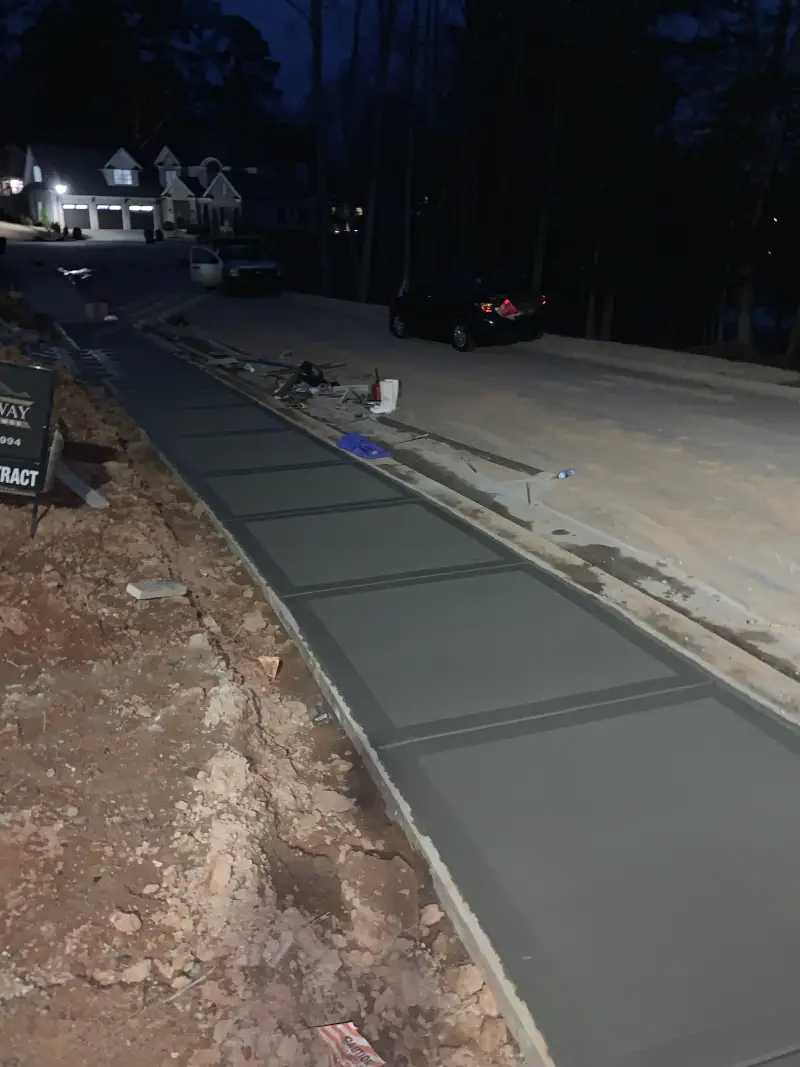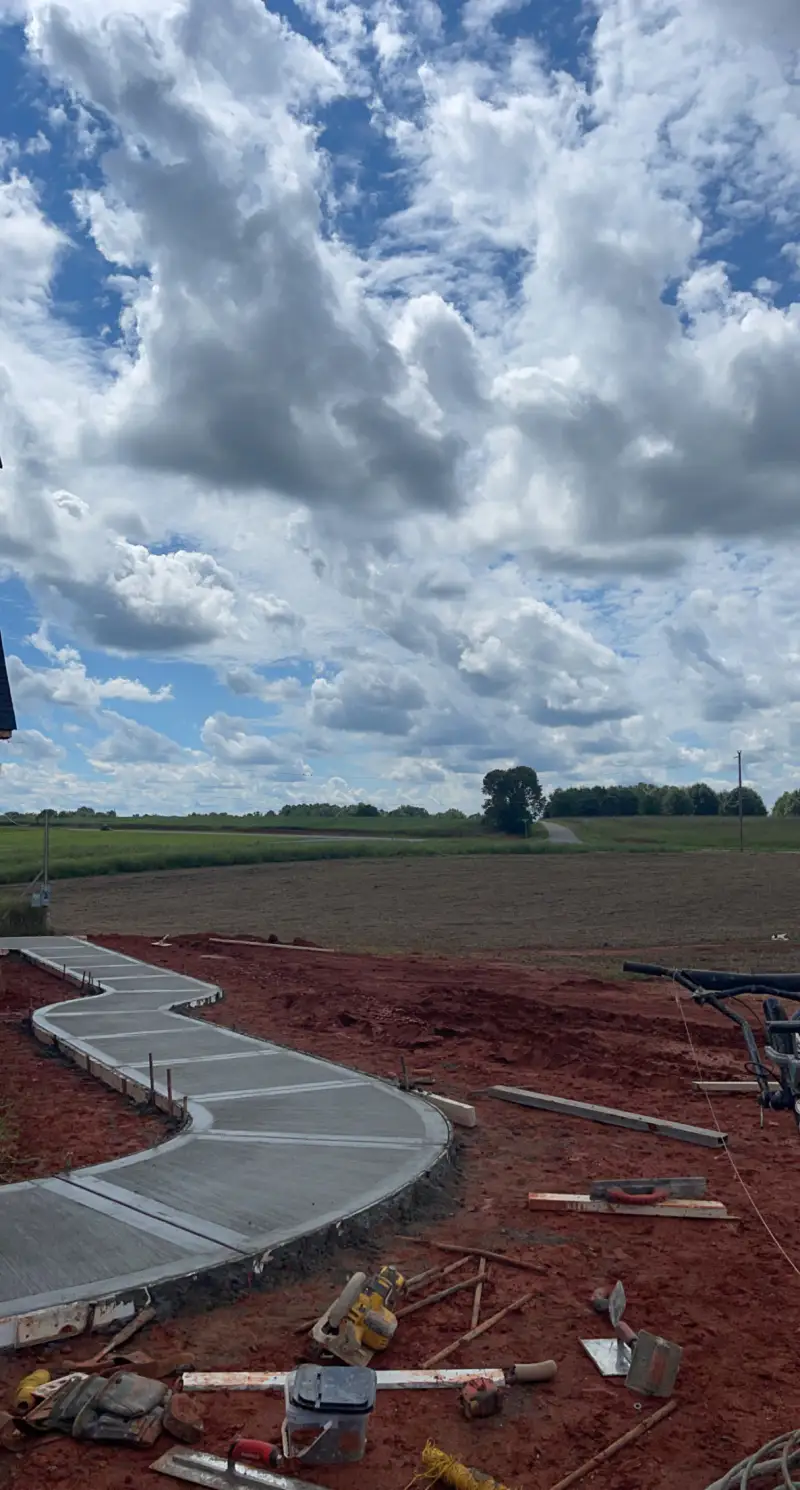
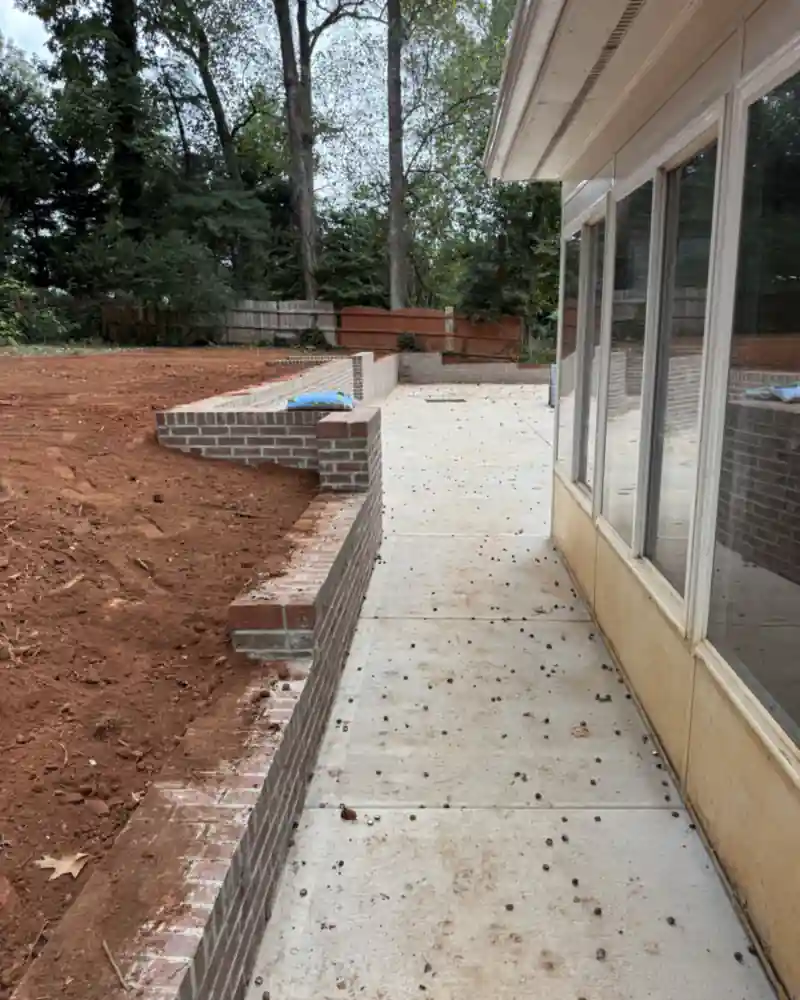
Not every cracked walkway needs to be torn out, and not every one can be saved with a patch. Here is how to read a failing concrete sidewalk, walkway, or set of steps in the Upstate, and how to know which fix you actually need.
By the crew at Ace Concrete Construction, Taylors, SC
A sidewalk or front walk is the first thing people step on when they come to your house or your business, and it is usually the last thing anyone budgets for until it turns into a problem. By the time a homeowner calls us, the walk is often already cracked, lifted at a joint, or flaking at the steps. The good news is that not all of it needs replacing. Some of it does. Knowing the difference keeps you from either throwing money at a walk that is past saving or tearing out one that only needed a small repair.
First, read what the concrete is doing
Concrete fails in a handful of recognizable ways, and each one points toward a different fix. Before you decide anything, walk the whole run in daylight and look for these:
Cracks
A thin, hairline crack that has not moved and sits flush is usually cosmetic, the concrete relieving normal stress, and it can be sealed. A crack you can fit a coin into, one where the two sides sit at different heights, or one that keeps growing is a different animal, because it means the slab is moving or the base under it has given way.
Lifting and trip hazards
When one slab stands higher than the one next to it, you have a trip hazard, and on a walk the public uses that is also a liability. A small lip can sometimes be ground flush. A section that has been pushed up a full step, or that rocks when you stand on it, has moved too far for grinding to fix.
Spalling and pitting
Flaking, peeling, and small pits, worst on steps, edges, and anywhere water sits, is spalling. Caught early on a sound slab, the surface can sometimes be cleaned up and protected. Once it has eaten down into the concrete and the aggregate is showing, the surface is gone and no coating brings it back.
Settling and sinking
A walk or step that has dropped below the surfaces around it, or that pools water after rain, has lost the support under it. You cannot fix that from the top. Whatever went wrong with the base or drainage has to be corrected, which almost always means lifting that section out.
Why walkways fail early in the Upstate
Most of what we tear out did not fail because concrete is bad. It failed because of what was, or was not, done under it, and our part of South Carolina makes two problems worse than average.
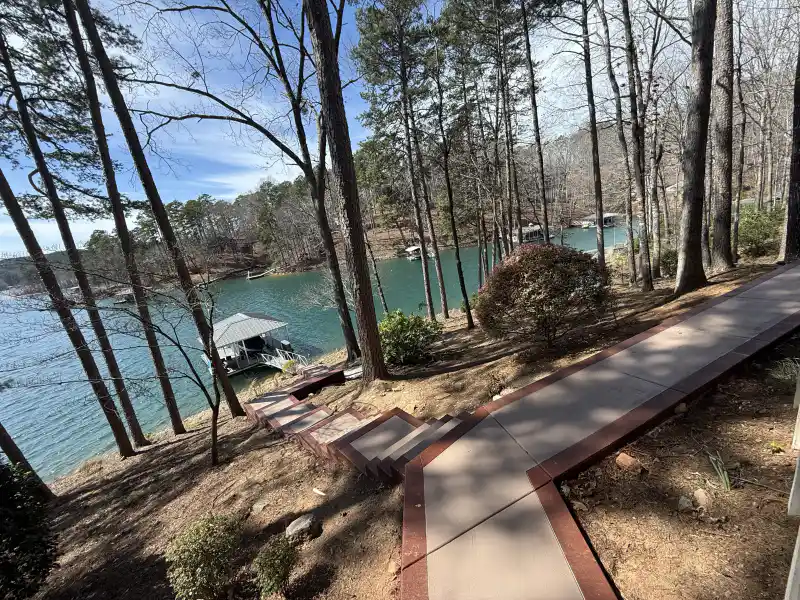
The first is red clay. Most of the Upstate sits on Piedmont clay that holds water and swells and shrinks as it wets and dries through the year. A walk poured straight onto that clay with no compacted stone base rides those movements, and that is what opens cracks and pushes slabs out of level. The second is trees. The mature hardwoods that make Greenville neighborhoods beautiful send roots straight under nearby walks, and given a few years those roots lift and crack the concrete from below. Add poor drainage, so water sits against the slab and freezes on cold nights, and you have the recipe for the cracking, heaving, and freeze-thaw surface damage we get called about every year.
When a repair is the right call
Repair makes sense when the walk is fundamentally sound and the problem is on the surface or small and stable. Sealing a hairline crack to keep water out of it, grinding down a minor lip so no one catches a toe, or cleaning up and protecting a surface that is just starting to scale can all buy real years when the slab underneath is still solid and level. If your walk is basically in good shape with one or two small issues, spending money to replace the whole thing is money wasted. Our guide to reading concrete cracks in Greenville goes deeper on telling a cosmetic crack from a structural one.
When replacement is the honest answer
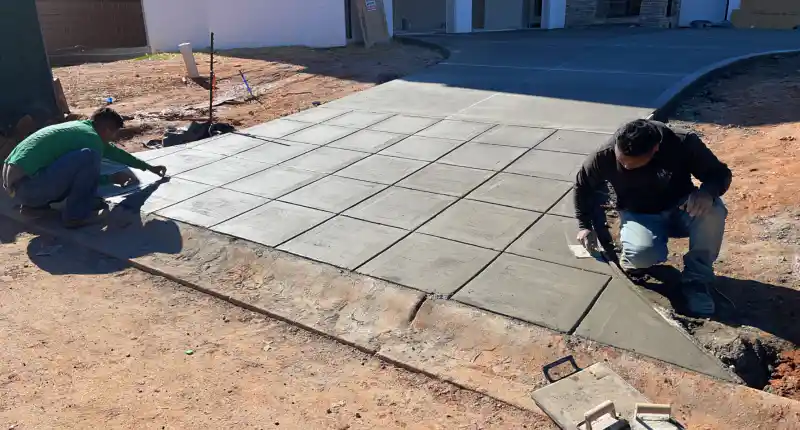
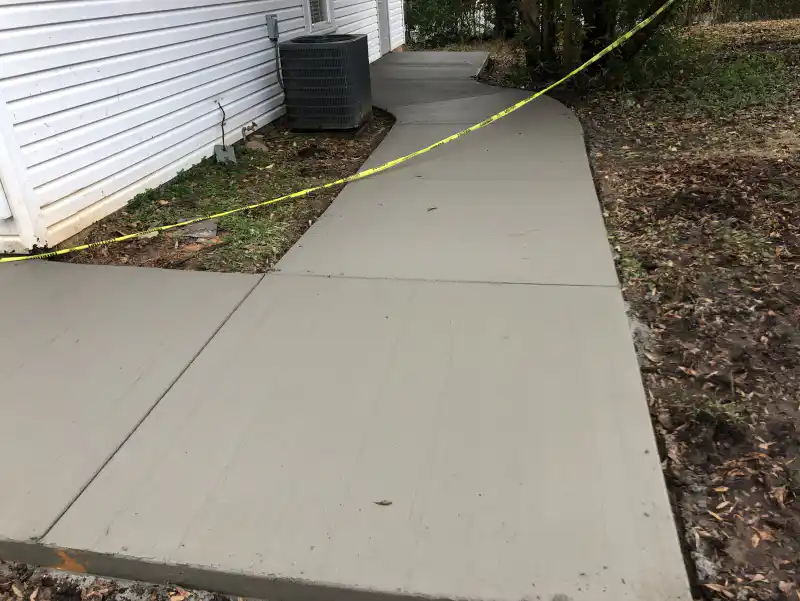
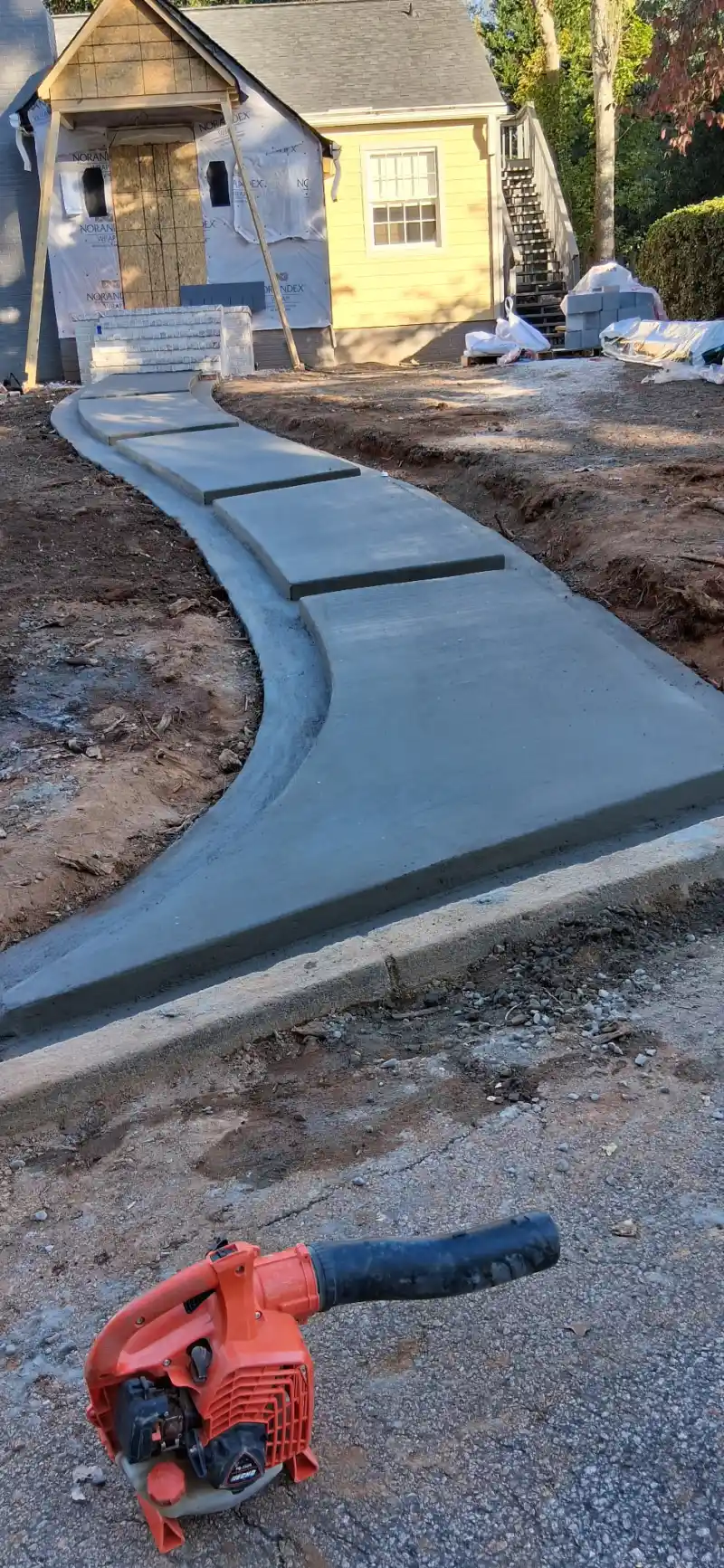
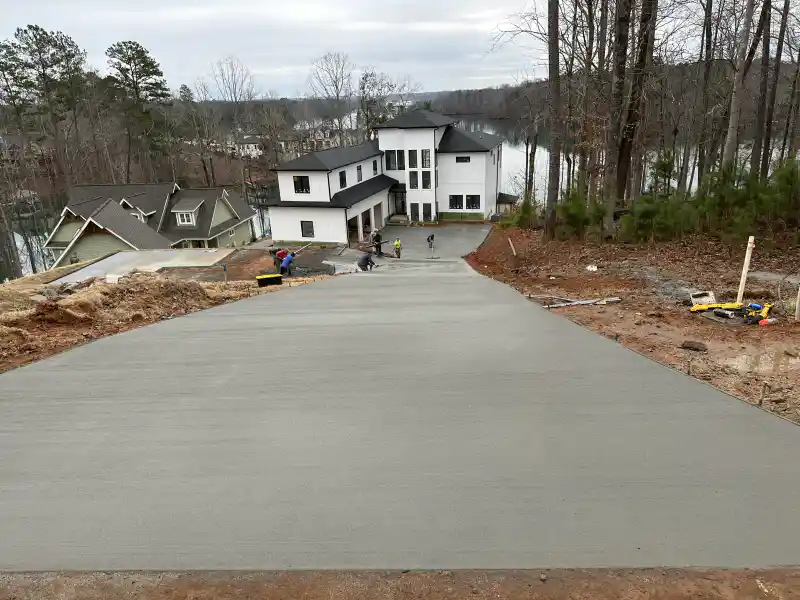
Replacement is the right call when the concrete has moved, broken, or worn past the surface. Sections that have heaved or settled out of level, cracks that run all the way through and keep opening, corners and edges that have crumbled away, and steps that have pulled loose from the house are all telling you the same thing: the slab or its base has failed, and no patch changes that. Tearing out the failed section and pouring new is not the expensive option in that case, it is the only one that actually lasts, because it lets us fix what went wrong underneath at the same time. That is the work our demolition and concrete repair crew handles, from a single bad section to a full sidewalk and walkway replacement.
What a walkway replacement done right includes
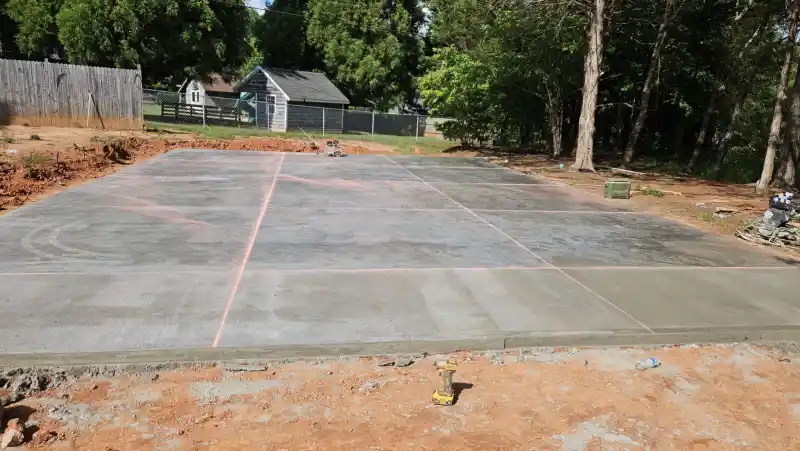
When we replace a walk or set of steps, the concrete you see is the easy part. What decides whether the new one outlasts the old is the work under it: the failed slab and any roots in the way are removed, the ground is regraded so water runs off the walk instead of pooling on it, a compacted stone base goes down over the clay to give the concrete stable, draining support, reinforcement and control joints are set so it cracks on clean lines instead of wandering, and the surface gets a broom finish for grip in the rain. Get those right and the new walk is a non-issue for decades. Skip them, which is how the old one usually got poured, and you are back where you started in a few years.
Not sure which one you are looking at?
That is the normal place to be, and it is exactly what a free estimate is for. We would rather tell you a walk can be repaired and save you the cost of replacing it than sell you a tear-out you did not need. If the failing concrete is a garage floor rather than a walk, the same repair-or-replace logic applies, and our guide to replacing an old garage floor slab walks through it. Either way, the first step is someone who pours this work looking at yours in person.
Questions Upstate property owners ask us
Can a cracked concrete sidewalk be repaired, or does it need to be replaced?
It depends on what the crack is telling you. A thin, stable hairline crack in an otherwise sound, level walkway is usually cosmetic and can be sealed to keep water out. Once you have wide cracks, sections that have broken loose, a slab that has heaved into a trip hazard, or corners that are crumbling away, patching stops being a real fix and tearing out that section and repouring is the honest call. We look at the whole run before we tell you which one you are dealing with, so you are not paying to patch a walkway that needs replacing.
What makes a Greenville sidewalk lift up and create a trip hazard?
Two things do most of it here. The first is tree roots: a maturing oak or maple near the walk pushes slabs up unevenly over the years until one edge stands proud of the next. The second is our Piedmont red clay, which holds water and moves as it wets and dries, so a walk poured on poor base or with bad drainage settles and heaves out of level. A small lip can sometimes be ground down; a section that has moved a lot, or keeps moving, usually needs to be replaced and the cause under it corrected.
How do you fix crumbling or spalling concrete steps?
Spalling, the flaking and pitting you see on older steps and stoops, comes from water and salt working on a weak surface layer. If the steps are structurally sound and only the surface has gone, they can sometimes be resurfaced. When the edges have broken back, the corners are gone, or the steps have settled and pulled away from the house, resurfacing is just hiding the problem, and forming and pouring new steps is the fix that lasts. We will tell you honestly which stage yours are at.
Get on the schedule
Ace Concrete Construction is a licensed South Carolina contractor (RBS.65343) based at 4706 Locust Hill Rd in Taylors, and our own crews handle every pour from grading to finish. Estimates are free, and we offer senior and military discounts. Request a free estimate online or call 864-214-5271. We answer seven days a week, 7am to 7pm.