A garage floor takes more abuse than almost any concrete on your property, and most of the ones we replace failed for reasons that were set on the day they were poured. Here is how to tell when an aging garage slab is worth resurfacing and when it is time to replace it.
By the crew at Ace Concrete Construction, Taylors, SC
Garage slabs are the work Ace Concrete was built on, so we see a lot of tired garage floors. They crack, they flake, they stain, and one corner near the door has usually dropped lower than the rest. Owners want to know the same thing every time: can this floor be saved, or does it need to come out? The answer comes down to how deep the trouble goes and what is under the slab, and the signs are easy to read once you know what you are looking at.
The signs an old garage floor is failing
Some garage-floor wear is cosmetic and some is structural, and they call for different answers. Look for these before you decide:
Cracks that run through, not just across the surface
Fine surface crazing is normal and harmless. A crack you can feel with a fingernail, that runs the length of the floor, or where the two sides sit at different heights is structural, and it means the slab is moving on whatever is under it.
Flaking, pitting, and a surface that dusts
When the top layer peels or pits, or the floor gives off concrete dust that never quite sweeps away, the surface has broken down, often from moisture coming up through the slab or from road salt tracked in over winters. On a sound slab this can sometimes be resurfaced; on a failing one it comes right back.
Sections that have settled or sit unevenly
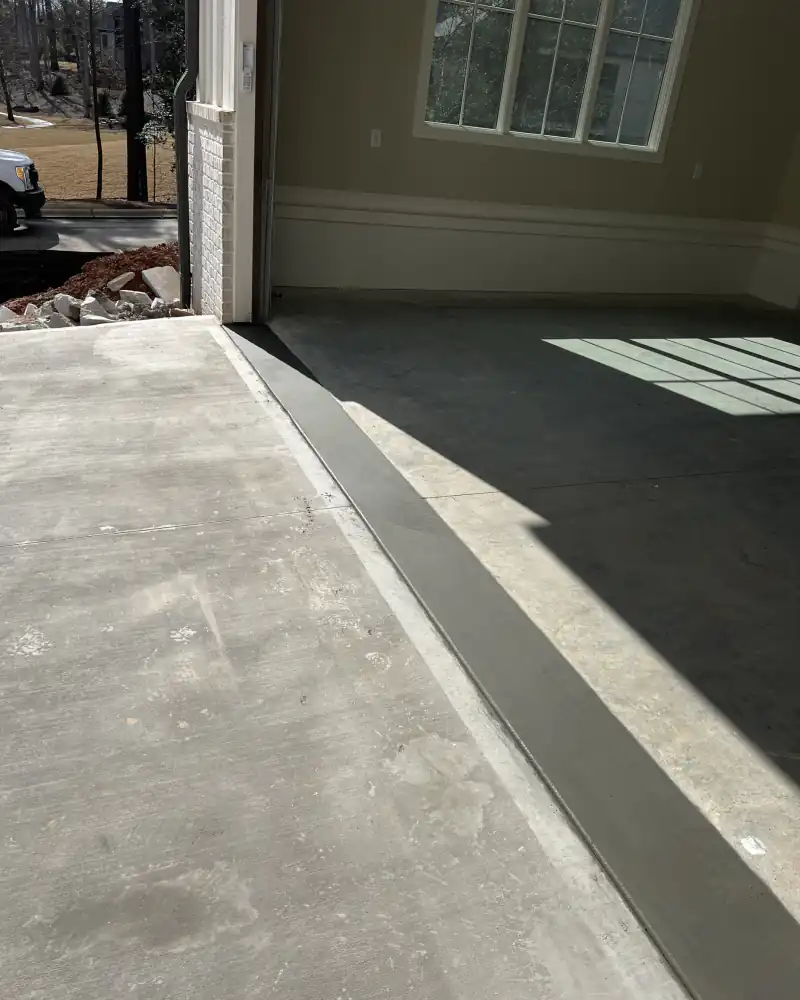
If a car rocks as it rolls across the floor, water runs to one corner, or the slab has dropped near the garage door, the support under the slab has given way. Nothing you do to the top fixes lost base.
Why so many Upstate garage floors wear out early
When a garage floor fails young, the concrete is rarely the culprit. It is what was, or was not, put under it. A lot of older slabs around Greenville were poured thin and fast, straight onto Piedmont red clay with little compacted stone base and no vapor barrier. Clay holds water and moves as it wets and dries, so the slab moves with it and cracks. With no vapor barrier, ground moisture wicks up through the concrete and breaks down the surface from underneath, which is why so many of these floors flake no matter what coating gets rolled onto them. Thin pours with no reinforcement or control joints then crack wherever the stress lands. None of that can be corrected from the top, and it is the honest reason a lot of garage floors need replacing rather than patching.
Resurface or replace: how we call it
Resurfacing is a real option when the slab is structurally solid and level and only the surface has gone. If the floor is sound underneath, cleaning it up and putting a proper surface back on it can be the right, cheaper move, and we will say so. Replacement is the honest answer when the slab is cracked through, has settled or heaved, or was poured thin with no base, because in those cases a new surface is just paint over a problem that comes back. The same repair-or-replace judgment applies to your outdoor flatwork too, and our guide to repairing versus replacing a concrete walkway walks through it. For the garage floor itself, the question is always whether the money you spend actually solves the problem or just hides it for a season.
What a garage slab replacement should include
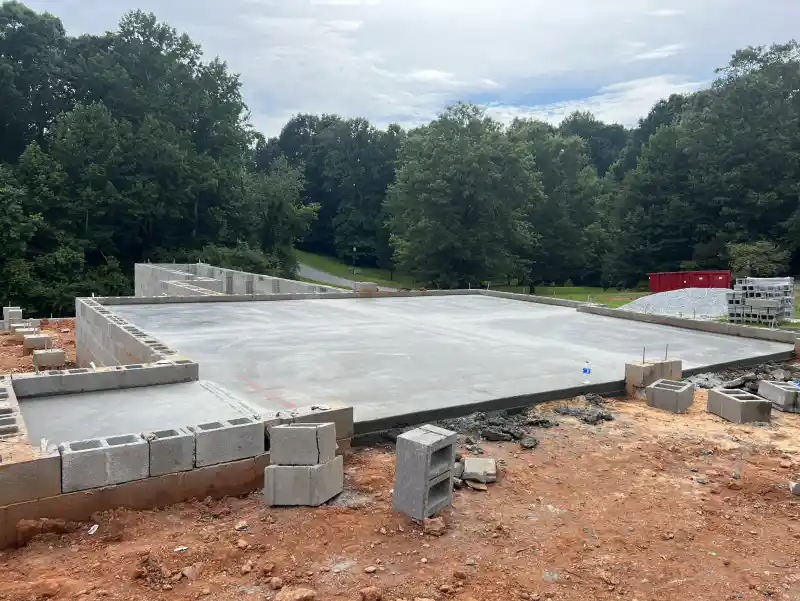
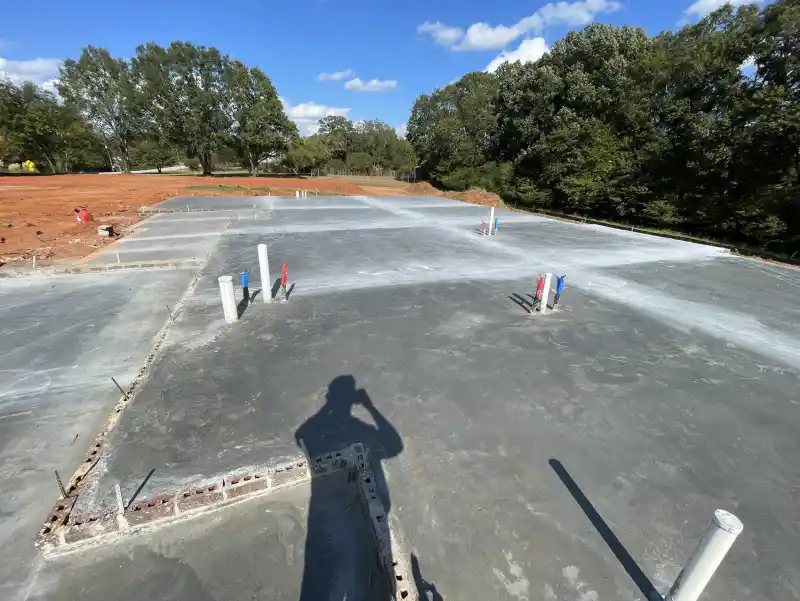
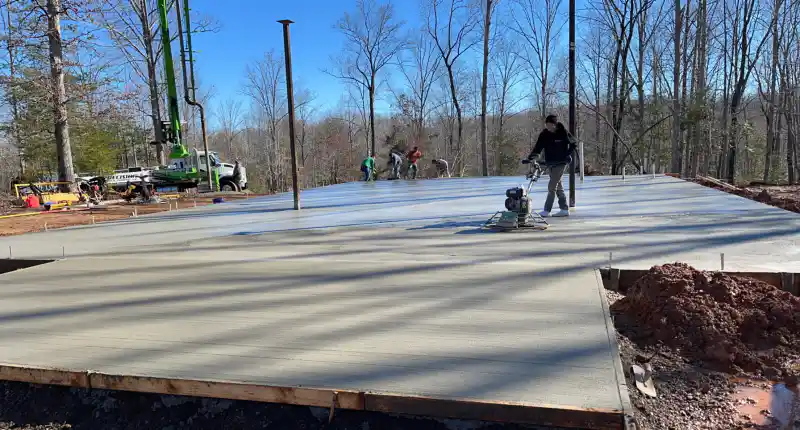
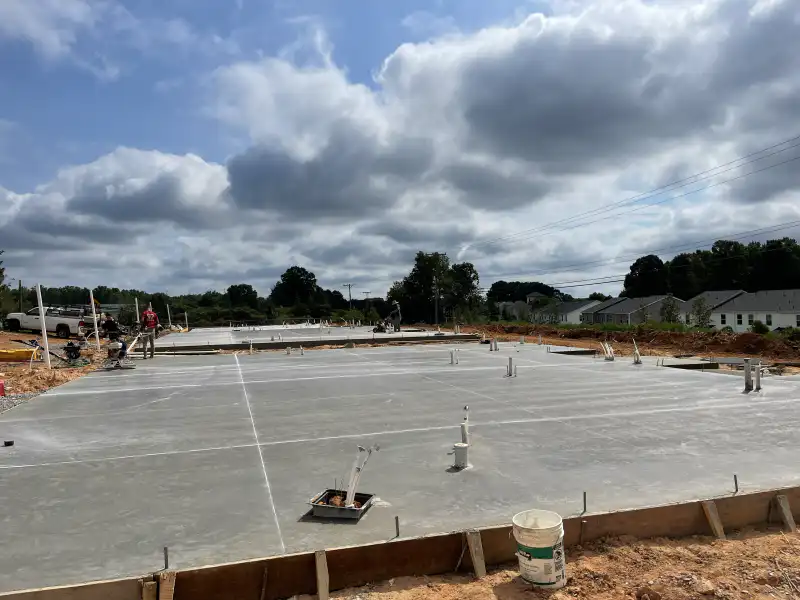
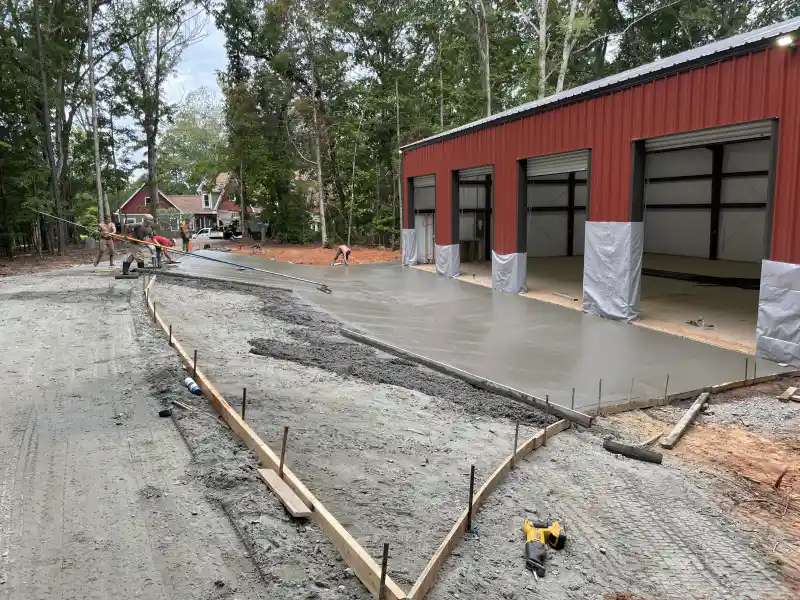
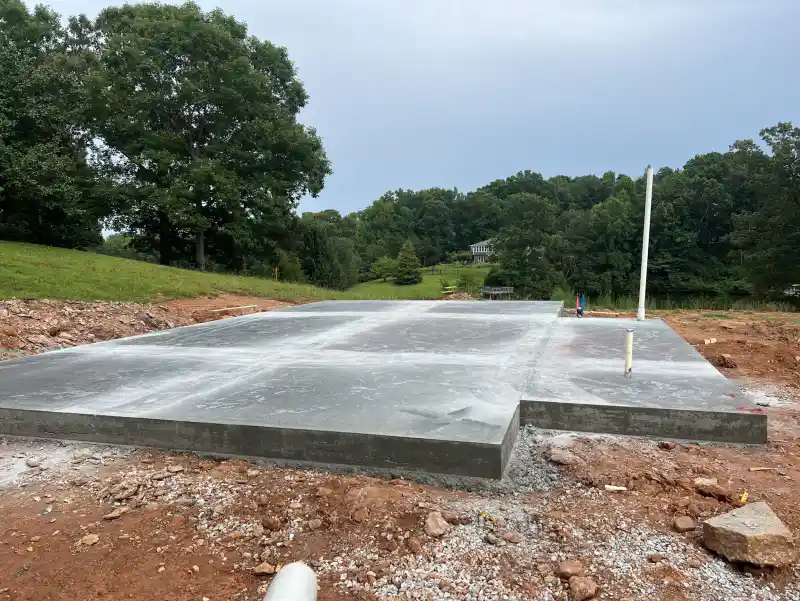
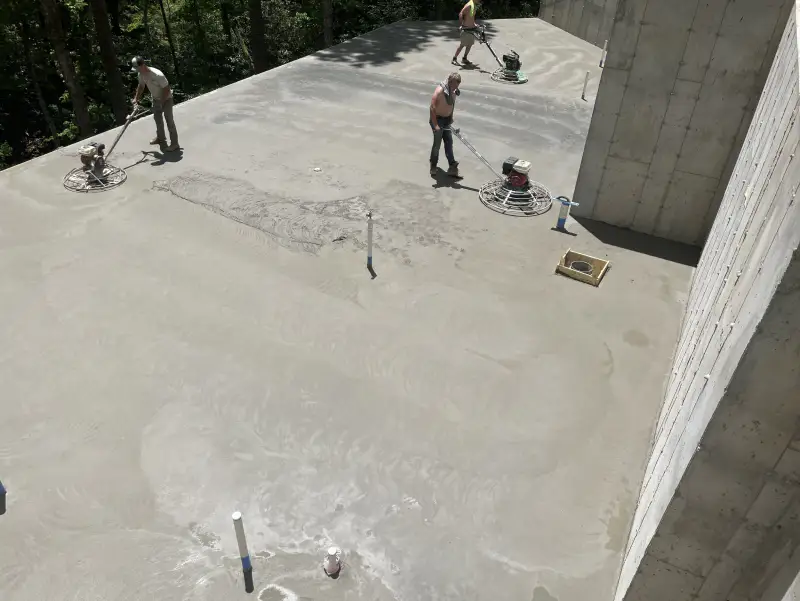
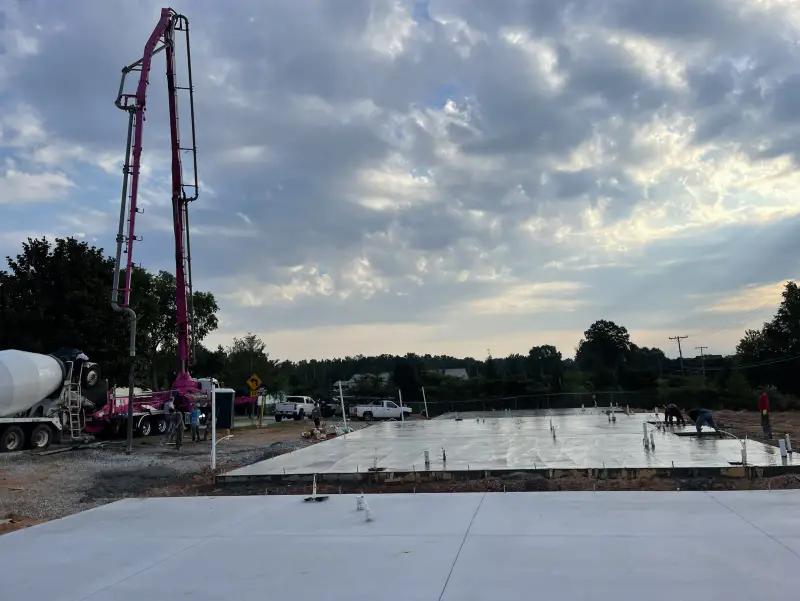
A garage floor carries more concentrated weight than most of the concrete on a property, so the build matters. Done right, the old slab is broken out and removed, the subgrade is regraded and compacted, and a stone base is laid and compacted over the clay to give the new floor stable, draining support. A vapor barrier goes down to keep ground moisture out of the slab, which is the step most of the failed floors never got. Then the concrete is poured to a thickness sized for vehicles, with reinforcement and control joints placed so it cracks on clean, intended lines, and finished for how the space is used. That is the standard we hold our concrete slab work to, and it is the difference between a floor that lasts and one you are replacing again in a few years. It is also part of our broader residential concrete services across Greenville and the Upstate.
Start with a look, not a guess
You cannot tell from a photo whether a garage floor needs resurfacing or replacing, and neither can we. It takes someone who pours this work standing on the slab, reading the cracks, and checking whether it sits level. That look is free, and it is the step that saves you from either patching a floor that is past saving or replacing one that had years left. Since garage slabs are what Ace Concrete does first and most, it is also the concrete we know best.
Questions Upstate property owners ask us
Can an old garage floor be resurfaced, or does the whole slab need replacing?
If the slab is structurally sound and level and only the top surface has flaked or stained, resurfacing can work and is worth asking about. Once the floor has cracks that run through it, sections that have settled or sit at different heights, or a slab that was poured thin with no real base, resurfacing is only cosmetic and the problems come back. In that case removing the old slab and pouring a new one built for vehicle loads is the fix that actually holds. We tell you which stage yours is at before you spend anything.
Why is my garage floor cracking and flaking in the first place?
The two usual causes are what is under the slab and how it was poured. A lot of older garage floors were poured thin, straight onto Upstate red clay with little or no compacted stone base and no vapor barrier, so the slab moves with the clay and moisture wicks up through it from below. Add tracked-in road salt in winter and years of vehicle weight, and the surface flakes and the slab cracks. A garage floor poured to the right thickness over a proper base, with reinforcement and control joints, does not do that.
What does replacing a garage floor slab involve?
The old slab is broken out and hauled off, the subgrade is regraded and compacted, a stone base is laid over the clay, and a vapor barrier goes down to keep ground moisture out of the new floor. Then the slab is poured to a thickness sized for vehicles, with reinforcement and control joints placed so it cracks on clean lines, and finished for the garage. The pour is a day; the prep is what makes it last, which is why garage slabs are the work we build our whole business around.
Get on the schedule
Ace Concrete Construction is a licensed South Carolina contractor (RBS.65343) based at 4706 Locust Hill Rd in Taylors, and our own crews handle every pour from grading to finish. Estimates are free, and we offer senior and military discounts. Request a free estimate online or call 864-214-5271. We answer seven days a week, 7am to 7pm.